

Who omi is for#
Builders prototyping wearable AI
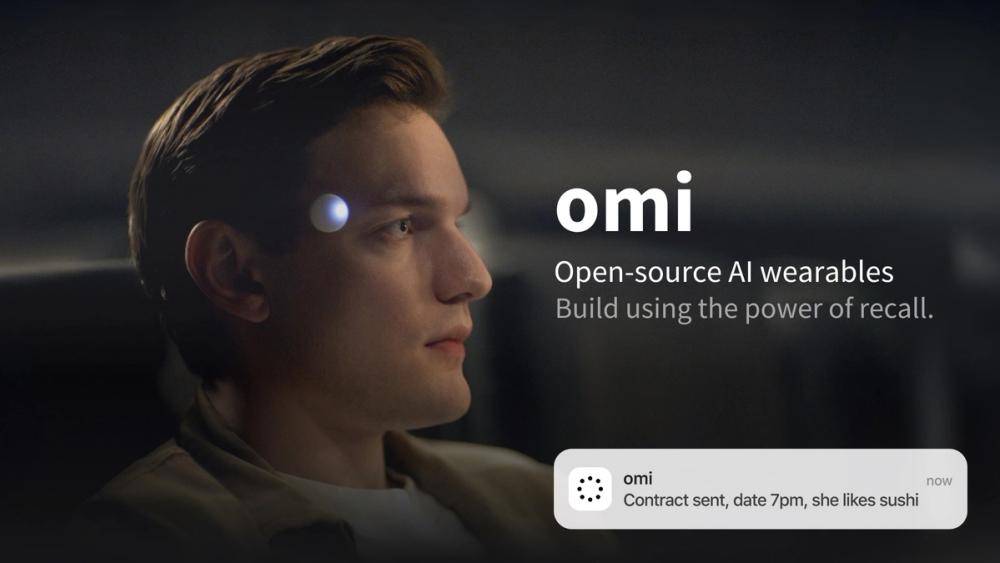
Omi fits developers who want source access while testing personal memory, meeting capture, or ambient assistant ideas.
Skip if:
Skip it if you need a fully supported consumer device with stable retail availability.
Researchers studying personal context tools
The project gives researchers a concrete codebase for exploring voice capture and memory workflows.
Skip if:
Avoid it when policy, consent, or retention requirements are not yet defined.
The problem it solves#
AI wearable projects sit between hardware, mobile apps, firmware, transcription, and memory retrieval. Closed products make that stack hard to inspect, extend, or repair when the vendor changes direction.
Builders need working source material across the device and software layers, not just a concept video. Without it, experimentation turns into waiting for a manufacturer roadmap or reverse-engineering a black box.
How it solves it#
Hardware and software repository
The Omi repository includes project code around the wearable device concept, giving builders a starting point for both product behavior and developer extension.
Conversation memory workflow
Omi focuses on capturing spoken context and turning it into searchable personal memory. That makes it closer to an experimental assistant platform than a generic recorder.
Developer app ecosystem
The project positions apps and integrations as part of the assistant workflow, so developers can explore use cases beyond passive transcription.
Strengths and trade-offs#
Strengths
- Built for experimentationOmi is strongest when the goal is learning, prototyping, or extending wearable AI behavior. Public source gives builders more room to test ideas than a sealed consumer gadget.
- MIT licenseMIT licensing makes experimentation and commercial prototyping easier than projects with network-copyleft or source-available restrictions.
Trade-offs
- -Experimental product categoryWearable AI is still a risky category. Battery life, recording consent, transcription quality, and social acceptance can matter more than the repository itself.
- -Not a mature enterprise deviceOrganizations needing procurement, fleet management, compliance controls, and support contracts should treat Omi as exploratory rather than a finished workplace platform.
What it's built on#
- Languages
- CC++DartJavaScriptPythonSwiftTypeScript
- Frameworks
- FlutterNext.jsReact
- Tooling
- esbuild
FAQ#
Is omi open source?
Yes. The Omi repository is MIT licensed.
Is omi a Humane Ai Pin replacement?
Not directly. Omi is better framed as an open wearable AI project for builders, not a managed replacement for a discontinued consumer product.
Who should use omi?
Developers and researchers experimenting with wearable AI are the clearest fit.
Similar open-source tools#

claude-obsidian
Self-organizing AI second brain for Obsidian, plain Markdown

humla
Private Mac meeting notes: no bot, on-device AI, MIT licensed.

vexa
Self-hosted meeting bot API for Meet, Teams, Zoom, and Jitsi

whishper
Local speech-to-text transcription and subtitling with a web UI

Handy
Free offline speech-to-text: runs on Windows, macOS, and Linux

FluidVoice
Voice-to-text for macOS with on-device AI and zero cloud dependency